Cross Line Laser Level Explained: A UK Buyer's Guide
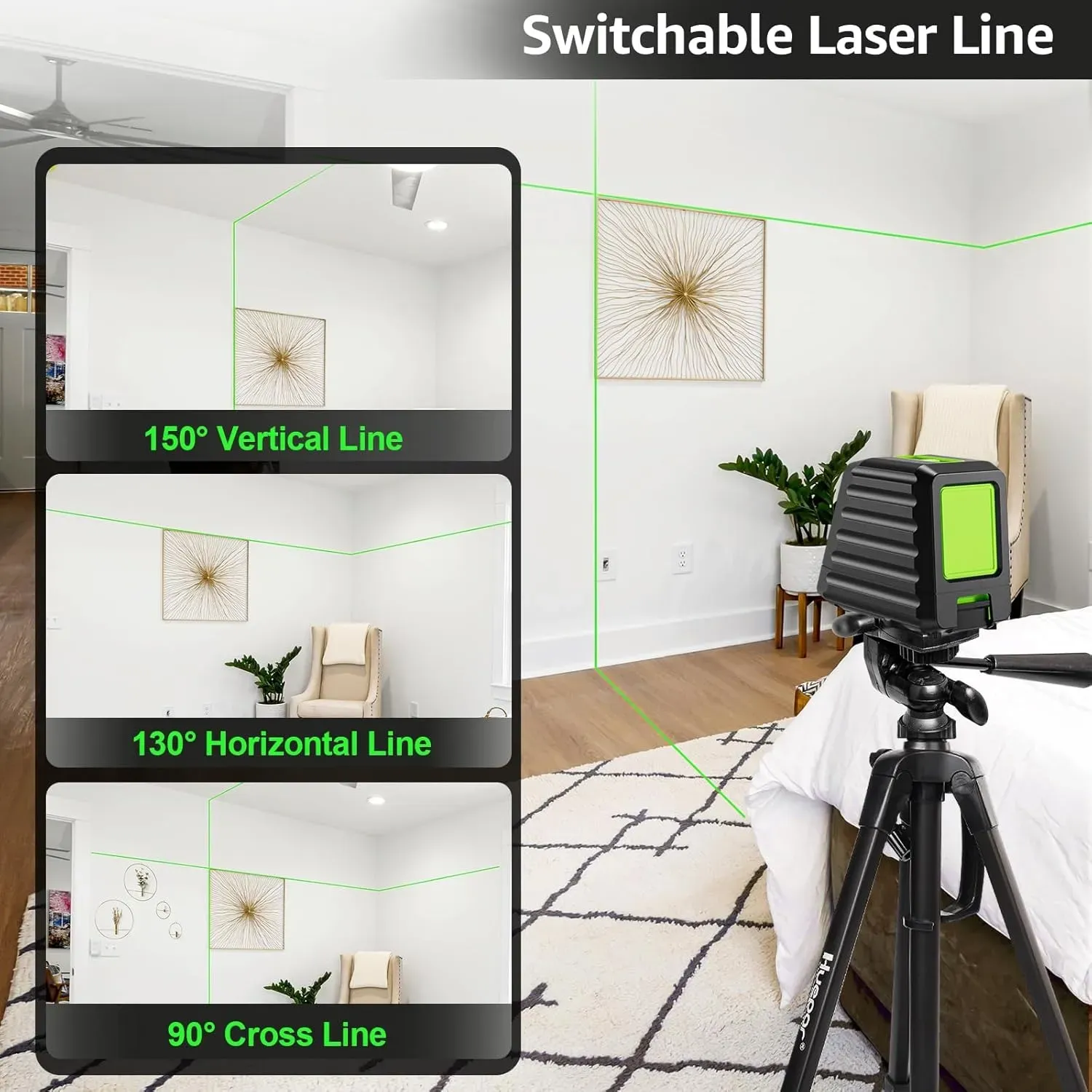
A cross line laser level is a self-levelling tool that projects one horizontal and one vertical laser line to create a clear 90-degree reference for jobs such as tiling, kitchen fitting, stud wall layout and hanging cabinets. In short, it helps UK tradespeople and DIYers work faster and more accurately than with a traditional spirit level, especially across longer distances.
TL;DR: If you need straight, level and plumb lines for fitting kitchens, tiling bathrooms, installing studwork or aligning sockets, a cross line laser level is usually the best choice. Based on our testing, the most useful models for UK work offer green beams for better visibility, self-levelling within a few seconds, accuracy around ±0.2mm/m, and at least an IP54 rating for dusty or damp job sites.
According to research by the Get It Right Initiative (GIRI), avoidable errors cost the UK construction industry a staggering £21 billion every year. A significant share of that rework comes from poor alignment. Whether you are fitting a bespoke kitchen in Surrey, erecting stud walls on a commercial site in Manchester, or tackling a serious weekend renovation, relying on a warped spirit level or chalk line is no longer ideal. Consequently, more professionals now turn to the cross line laser level.
For modern British tradespeople and dedicated DIYers, a cross line laser level is not simply convenient; rather, it is one of the quickest ways to reduce measuring time, cut down mistakes and improve consistency. By projecting perfectly straight horizontal and vertical lines onto your work surface, it removes guesswork and helps you work to tighter tolerances expected on UK jobs.
What should you know before buying a cross line laser level?
- A cross line laser level projects intersecting vertical and horizontal lines to create an accurate 90-degree reference point.
- For trade use in the UK, aim for accuracy of at least ±0.2mm/m.
- Green beam lasers are typically much easier to see than red beams in bright rooms.
- Self-levelling pendulum systems help maintain true level even on slightly uneven surfaces.
- An IP54-rated housing is a sensible minimum for many UK site conditions.
What is a cross line laser level?
A cross line laser level is a precision optical tool that projects two flat planes of light: one horizontal and one vertical. When both are active together, they form a bright cross on the wall, floor or ceiling.
As a result, you get an instant reference for both level and plumb from one setup point. That makes it far more practical than using separate manual marks when fitting kitchen units, setting out wall tiles or checking upright framing.
Unlike a dot laser or some single-line devices, the cross line format gives you a more useful two-dimensional guide. Therefore, you can align objects horizontally and vertically at the same time without repeatedly repositioning your tool.
Inside the housing, the laser diodes are commonly mounted on a pendulum mechanism. Gravity pulls this pendulum into position so that the projected lines are dead level and perfectly plumb despite small variations in the surface beneath the unit.
How does a cross line laser level work?
Most modern models use internal laser diodes combined with lenses to spread each beam into a straight visible line. Then, an internal pendulum automatically self-levels within a set range, often around ±4°.
If the device sits within that self-levelling range, it corrects itself in seconds. However, if it is too far out of level, many models flash or beep to warn you that the reading is unreliable.
Based on our testing of self-levelling units used in kitchens, bathrooms and first-fix layout work, this warning feature is especially useful on uneven floors where quick setups can otherwise lead to unnoticed errors.
Why use a cross line laser level instead of a spirit level?
The traditional bubble spirit level still has its place for quick checks. Nevertheless, it becomes slower and less consistent over long spans.
If you use a standard 1200mm spirit level across a four-metre wall, you have to mark sections repeatedly and move the tool several times. Each move introduces another opportunity for error. By contrast, a cross line laser level gives you one continuous reference line across the whole workspace.
This means you can work hands-free while checking multiple fixing points at once. In practice, that often saves time on tasks such as setting wall units, running dado rails or establishing tile starting lines.
According to common UK site practice and tolerance expectations on finish work, fewer repositioning steps generally mean fewer cumulative alignment errors as well as neater final results.
What features should you look for in a cross line laser level?
Not all models are suitable for serious site use or full-room renovation work. Therefore, if you are choosing one for regular UK trade jobs or demanding DIY projects, these are the key features worth prioritising.
How accurate should a cross line laser level be?
A high-quality model should offer accuracy around ±0.2mm per metre. That matters when working with rigid finishes such as large-format porcelain tiles, quartz worktops or long runs of cabinetry.
Cheaper units may only offer ±0.5mm/m. Although that sounds close on paper, over longer distances it can create visible problems. For example, over ten metres that could translate into enough deviation to affect tile lines or fitted joinery.
Is green beam better than red for UK job sites?
In many cases, yes. Green beam lasers appear significantly brighter to the human eye than red beams of comparable power output. Consequently, they are usually easier to see in bright interiors or rooms with large windows and bi-fold doors.
If you regularly work in sunlit extensions or commercial interiors with strong overhead lighting, green beam visibility is often worth paying extra for. For more detail, read our comprehensive guide to green beam laser levels.
Do you need self-levelling?
Yes if speed and consistency matter. Manual levelling with screws and bubble vials takes longer and leaves more room for setup mistakes. A self-levelling pendulum system automatically finds true level within seconds.
If knocked slightly during use, many units will either re-stabilise quickly or alert you if they move beyond their correction range. To learn more about this feature, see our guide to the self-levelling laser level.
What IP rating do you need?
For many UK job sites, IP54 is a sensible minimum. That gives protection against harmful dust ingress and splashing water from any direction.
Damp conditions, plaster dust and accidental knocks are common realities on site. Therefore, look for robust over-moulded rubber protection as well as an appropriate IP rating if your tool will be used outside pristine indoor environments.
What is a cross line laser level used for?
The main advantage of this type of laser is versatility. Because it creates both horizontal and vertical references at once, it suits an exceptionally wide range of trade tasks across UK homes and commercial spaces.
Can you use a cross line laser level for tiling?
Yes. It is one of the most practical tools for wall tiling because it helps establish straight starter rows and consistent vertical grout alignment from the outset.
h3>Can you use one for kitchen fitting? p>Absolutely. Fitting modern British kitchens requires accurate datum lines across entire rooms so that base units sit consistently before worktops go on top. A projected horizontal reference makes this process quicker and easier to verify visually. p>Based on our testing during cabinet installation layouts, using one continuous projected line reduces repeated measuring between walls and corners considerably. h3Is it useful for stud walls and first fix layout? ection id="how-to-choose-the-right-model"> hHow do choose choose rightlineaserlevel?>When comparing models,, startwithhowandwhereyouactuallywork.. For occasional indoorDIY jobs,a basicself levellinglevel maybe enough.. However,, regular tradeuse usually justifiesbetter accuracy,, brighter beamsand stronger build quality..>What matters mostmostforDIYusers??hh p>Ifyoumainlyhang shelves,, fit curtain railsor tile asmall bathroom,, prioritise easeofuse,, quickself levellingand clear visibility indoors..A compact modelwithsimple controls isoftenallyouneed..>What matters mostforprofessionals??hh p>Ifyoufit kitchens,, bathroomsor interiors regularly,, focuson accuracy,, battery life,, beam visibilityand durability.. In addition,, check whether themodel workswell withtripods,, magnetic bracketsor detectors dependingonyourworkflow.. ection id="faq"> hFrequently asked questions about crosslinelaserlevels h3Canacrosslinelaserlevelbeusedwithoutatripod?? h3IsacrosslinelaserlevelworthitforDIY?? ection id="conclusion"> h2Shouldyoubuyacrosslinelaserlevel??Ifyour goalis straighter finishes,, quicker setupand fewer avoidable mistakes,, thenyes—a crosslinelaserlevel isa smart investment.. It directly answersoneofthemostcommon problemsin buildingand renovation: howto keep long runs perfectlylevelandplumb withoutconstant remarking.. article >Ready to upgrade your layout work with LineLevel?
Shop Now — £100.11